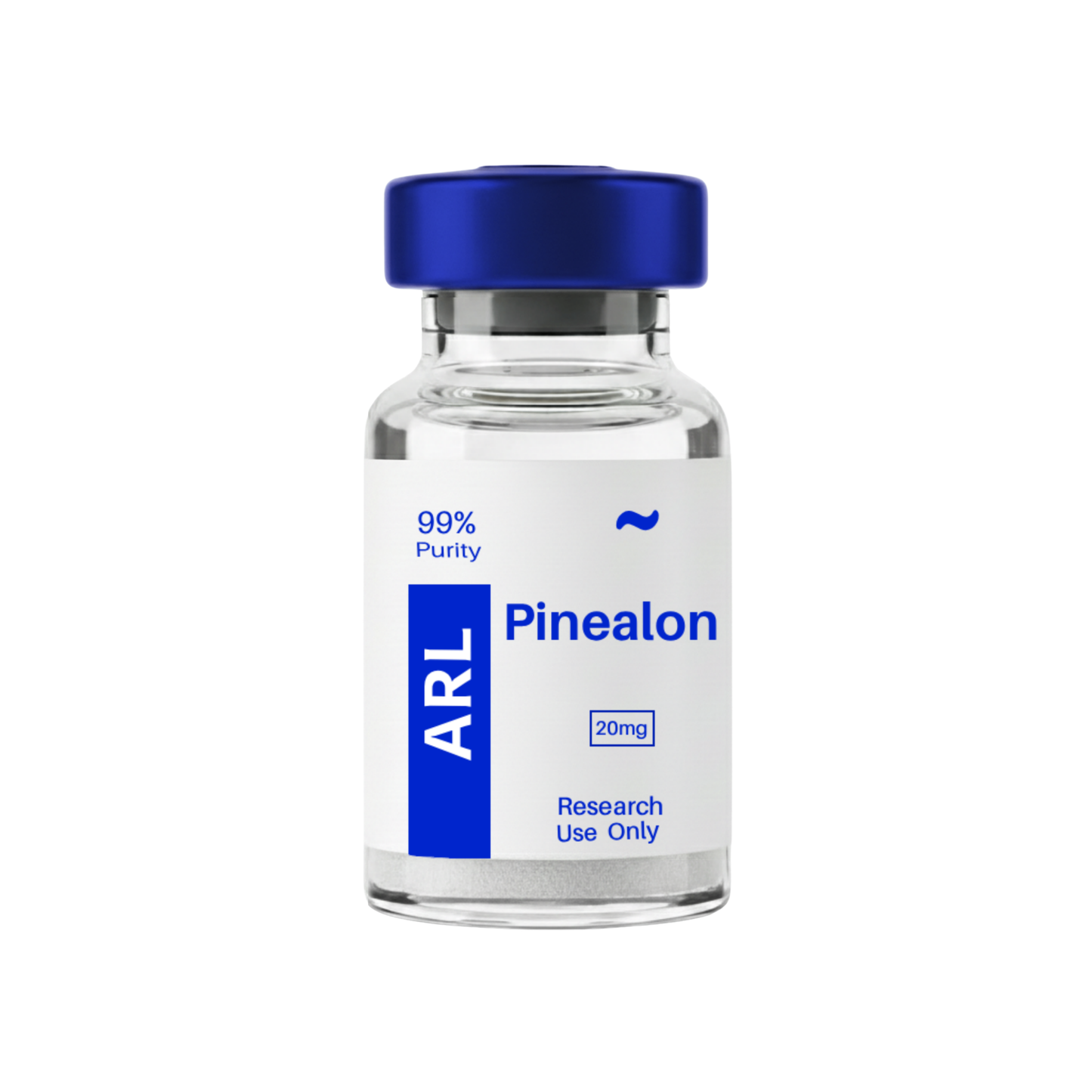
Pinealon
Pinealon
This batch of Pinealon Peptide has been third party lab tested and verified for quality.
Contents: Pinealon (Tripeptide Glu–Asp–Arg)
Form: Lyophilized Powder
Purity: 99.3%
Couldn't load pickup availability
Free Reconstitution Solution automatically added to your cart with each order.
This product is Made, Tested & Shipped From Canada.
Ships Today
Order by 1:00 PM EST
Free Shipping
For 2 or more vials
Verified+

The Khavinson Bioregulator Legacy: Pinealon Protocol
Introduction to Bioregulation and the Khavinson Legacy
The concept of bioregulation, particularly as developed by Dr. Vladimir Khavinson and his colleagues at the St. Petersburg Institute of Bioregulation and Gerontology, represents a paradigm shift in understanding aging and longevity. This theory posits that aging is fundamentally linked to a decline in peptide-mediated cellular and organ function. Khavinson's extensive research, spanning several decades, focused on identifying naturally occurring, short-chain peptides—bioregulators—that can restore specific organ functions, thereby extending healthspan and lifespan.
The institute’s work has led to the isolation and synthesis of numerous organ-specific peptides. Among these, the research surrounding Pinealon is arguably one of the most significant, highlighting the central role of the pineal gland in the overall neuroendocrine system and the aging process.
Pinealon: The Pineal Gland Peptide
Pinealon is a synthetic peptide based on the structure of naturally occurring peptides found in the pineal gland. Its designation as a "pineal gland peptide" underscores its direct and targeted action on this crucial endocrine organ.
The pineal gland, often referred to as the "master clock," orchestrates numerous physiological cycles, most notably the circadian rhythm, primarily through the synthesis and secretion of melatonin. As an organism ages, the function of the pineal gland inevitably declines, leading to:
- Decreased melatonin production.
- Disruption of sleep-wake cycles.
- Impaired immune surveillance.
- Dysregulation of other endocrine axes (e.g., thyroid, adrenal, reproductive).
Mechanism of Action
Khavinson's research established that Pinealon specifically acts on pineal gland cells. The key insight into its mechanism is its ability to:
- Restore Melatonin Synthesis: Pinealon has been shown to increase the functional activity of pinealocytes, leading to the normalization of endogenous melatonin production. This is distinct from exogenous melatonin administration, as it revives the body's native capacity to produce the hormone.
- Normalize Neuroendocrine Function: By restoring pineal function, Pinealon indirectly influences the hypothalamic-pituitary axis and other peripheral endocrine glands, leading to a system-wide rebalancing of hormonal levels.
- Telomerase Activation: Some studies related to the Pinealon class of peptides suggest a potential role in telomerase activity and telomere maintenance, linking its bioregulatory effects directly to genetic mechanisms of aging.
The Bioregulator Theory of Aging and Geroprotection
Pinealon is a prime example of the bioregulator theory in practice. This theory asserts that:
- Peptide Deficiency: Aging results from tissue-specific reductions in functional protein and peptide synthesis.
- Organ Specificity: Short-chain peptides, highly specific to their target tissues (like Pinealon to the pineal gland), can bind to regulatory regions of DNA.
- Gene Activation: This binding selectively modulates gene expression, promoting the synthesis of proteins required for optimal cellular function and reversing age-related decline.
- Geroprotection: By restoring function to key organs (e.g., pineal gland, thymus, brain), these bioregulators can slow the rate of biological aging and offer protection against age-associated diseases.
The Khavinson Protocol, utilizing peptides like Pinealon, is therefore not merely a symptomatic treatment but an intervention aimed at addressing the root cause of aging—the decline in peptide signaling and gene regulation.
Pinealon Protocol for Research
The Product: Khavinson Protocol Pinealon
Khavinson Protocol Pinealon is a synthetic preparation designed to replicate the biological activity of the pineal gland's natural bioregulators.
Feature
Description
Target Organ
Pineal Gland
Active Compound
Synthetic short-chain peptide (Pinealon)
Biological Effect
Restores endogenous melatonin and normalizes neuroendocrine rhythm
Research Focus
Aging, circadian rhythm disorders, neuroprotection, hormonal balance
Source
Based on the research of Dr. Vladimir Khavinson and the St. Petersburg Institute of Bioregulation
Key Insight: A Synthetic Model for Studying Organ-Specific Peptide Signaling
Pinealon offers a crucial tool for research use, providing a precise, synthetic model for studying organ-specific peptide signaling. Researchers can utilize this controlled compound to:
- Investigate Gene Expression: Determine which genes are upregulated or downregulated in pinealocytes following peptide administration.
- Map Receptor Interaction: Study the specific receptor or binding sites through which the peptide exerts its action.
- Analyze Systemic Effects: Research the downstream impacts of normalizing pineal function on other endocrine organs, the immune system, and cognitive function in various models.
- Develop New Therapeutics: Use Pinealon's structure and activity profile as a template for designing novel, highly potent bioregulator mimetics.
Page 4: Detailed Research Applications
The specificity and biological potency of Khavinson Protocol Pinealon make it valuable in several key areas of gerontology and neurobiology research.
Research Focus Area 1: Circadian Rhythm and Sleep Disorders
The most direct research application involves the study of circadian rhythm disorders. Researchers can use Pinealon to investigate:
- The mechanism by which the pineal peptide restores the amplitude and phase of melatonin secretion in aged or light-damaged models.
- Its effectiveness in reversing jet lag or shift-work induced disruptions, providing a model for chronobiological therapies.
Research Focus Area 2: Neuroendocrine-Immune Axis
The pineal gland's influence on the immune system is mediated through melatonin and other neuroendocrine hormones.
- Pinealon can be used to study the crosstalk between the pineal gland and the thymus (another organ targeted by Khavinson peptides).
- Research can focus on how restoring pineal function via Pinealon influences T-cell maturation and overall immune surveillance, particularly in immunosuppressed or aged models.
Research Focus Area 3: Neuroprotection and Cognitive Function
As an anti-aging peptide, Pinealon’s effects extend to the central nervous system (CNS).
- Studies can investigate its potential to mitigate oxidative stress and inflammation within the brain, two hallmarks of neurodegenerative diseases.
- Researchers may use the peptide to explore the link between normalized melatonin production and improved cognitive outcomes in models of mild cognitive impairment.
Page 5: The Biochemical and Structural Basis
Pinealon’s effectiveness lies in its specific short-chain amino acid sequence.
Peptide Chemistry
While the exact structure is proprietary to the Khavinson Protocol, bioregulatory peptides are generally short-chain peptides (2-4 amino acids). This size is crucial because it allows them to:
- Bypass the blood-brain barrier (BBB) and the digestive tract with relative ease when administered.
- Maintain high binding affinity and specificity for their target DNA/RNA sequences or receptors.
Dosage and Administration Research
For research purposes, studying the optimal dosage and administration route is critical. The Khavinson protocols typically use low, physiological doses, reflecting the natural concentration of these regulators in the body.
The table below outlines common parameters for in vivo research models:
Research Parameter
Typical Range (For Research Use Only)
Rationale
Dose (Peptide/Kg)
0.05 - 0.5 mg/kg
Mimics physiological concentrations; ensures regulatory, not pharmacological, effect.
Administration Route
Subcutaneous/Intranasal
Maximizes bioavailability and bypasses first-pass metabolism.
Duration of Protocol
5 - 10 days (Acute)
Sufficient time for gene expression changes and functional restoration to occur.
Page 6: Advanced Studies in Gene Regulation
The core mechanism of Pinealon is its effect on gene expression. Detailed molecular biology studies are essential to fully characterize its legacy.
Modulating Gene Expression
Research suggests that Pinealon interacts with specific elements within the regulatory region of genes involved in pineal function, such as those encoding for N-acetylserotonin O-methyltransferase (ASMT), the final enzyme in the melatonin synthesis pathway.
A primary research objective is to:
- Identify the exact DNA/RNA binding sequence for Pinealon.
- Quantify the upregulation of key transcription factors (TFs) in pinealocytes following exposure.
Epigenetic Influence
Beyond direct gene regulation, advanced research should explore the epigenetic influence of Pinealon. The peptide may influence:
- DNA Methylation: Changes in the methylation pattern of key pineal genes.
- Histone Modification: Alterations in histone acetylation or methylation that open up chromatin for transcription.
This level of investigation further establishes Pinealon as a powerful tool for studying age-related epigenetic drift.
Page 7: Comparison to Exogenous Melatonin
A critical area of research is differentiating the effects of Pinealon (the bioregulator) from those of standard exogenous melatonin supplementation.
Research Comparison Points
Feature
Pinealon (Bioregulator)
Exogenous Melatonin
Mechanism
Restores endogenous pineal gland function by upregulating melatonin synthesis genes.
Provides the final hormone product directly.
Dose Relationship
Low, physiological dose triggers systemic regulatory cascade.
Pharmacological dose is often required for effect; can lead to feedback suppression.
Duration of Effect
Sustained systemic normalization after a protocol course.
Short-acting; effects cease shortly after metabolism.
Target
The regulatory machinery of the pineal gland.
Systemic receptors for the hormone melatonin.
The Khavinson legacy is built on the belief that restoring the body’s innate synthetic capabilities (bioregulation) is superior to merely replacing the missing end-product (hormone supplementation).
Page 8: Potential Limitations and Future Research Directions
While the research surrounding Pinealon is highly promising, several avenues of research are needed to fully understand its implications.
Limitations to Address (For Research Use Only)
- Tissue Specificity Confirmation: Further research is needed to rigorously confirm that Pinealon acts only on the pineal gland and does not induce unwanted regulatory changes in other tissues that might share similar short-sequence recognition sites.
- Long-term Safety in Models: Longitudinal studies in research models are necessary to definitively establish the long-term safety profile and functional persistence of the effects after peptide cessation.
Future Research Directions
- Combination Protocols: Investigating the synergistic effects of Pinealon when combined with other Khavinson bioregulators (e.g., Thymalin for the thymus, Cerebrolizin for the brain).
- Delivery System Optimization: Exploring novel, non-invasive delivery systems (e.g., liposomes, targeted nanoparticles) to enhance bioavailability and research efficacy.
- Personalized Bioregulation: Developing biomarkers to predict which research models would respond best to the Pinealon Protocol based on pre-existing levels of pineal function decline.
Page 9: Ethical Considerations in Bioregulator Research
Research involving compounds like Khavinson Protocol Pinealon necessitates strict adherence to ethical and regulatory standards.
Regulatory Context
It is paramount that researchers understand and communicate the specific status of this product:
Disclaimer: For research use only. Not for clinical administration.
This means:
- The product should only be used in controlled laboratory settings or animal models as specified by institutional review boards (IRBs) or animal care and use committees (IACUCs).
- It must never be administered to human subjects outside of formally approved, phase-specific clinical trials.
- All data generated must be accurately documented and reported according to Good Laboratory Practice (GLP) standards.
Responsible Use of the Legacy
The legacy of Dr. Khavinson is a significant scientific contribution. Responsible researchers must ensure that:
- The complexity of bioregulation is not oversimplified.
- Research findings are disseminated responsibly, avoiding sensationalism or unauthorized claims of clinical applicability.
The focus must remain on the synthetic peptide's role as a tool for studying fundamental biological processes, specifically organ-specific peptide signaling and the mechanics of aging.
Page 10: Summary and Conclusion
The Khavinson Protocol Pinealon embodies the culmination of decades of targeted bioregulatory research. As a synthetic pineal gland peptide, it offers an unprecedented opportunity to study the central control mechanisms of aging.
Pinealon's core significance lies in its ability to restore endogenous melatonin synthesis and normalize the neuroendocrine axis. This represents a key advancement in the bioregulator theory of geroprotection, providing a model for reversing age-related functional decline at the regulatory level.
For the scientific community, Khavinson Protocol Pinealon is a critical tool for advancing research in:
- Chronobiology
- Neuroendocrinology
- Geroprotective strategies
The continued study of this product is essential to fully realize the potential of the bioregulator legacy.
Further Research Documentation: File
-
check_circle
HIGHEST QUALITY PEPTIDES
Our products are scientifically formulated and manufactured in cGMP-compliant facilities.
-
encrypted
FAST DELIVERY
Enjoy fast and reliable 3–5 day shipping.
-
check_circle
Dedicated Customer Service
Our customer service team is highly knowledgeable in peptide research and its applications. We’re available 24/7 to assist you.
Verified reviews
Tested. Verified. Trusted.
We take a laboratory-first approach to quality. Each batch is made under controlled conditions and verified by an independent lab (HPLC/MS). We only ship batches that test ≥99% purity, and we provide a full COA, including identity, methods, and chromatograms, for your review.
You may also like
-
SAVE 24%Thymosin Alpha-1
Regular price From $79.00Regular price From $79.00 Sale priceUnit price / per$104.0024% -
SAVE 23%Tesamorelin
Regular price From $80.00Regular price From $80.00 Sale priceUnit price / per$105.0023% -
SAVE 26%Sterile Water
Regular price From $14.00Regular price From $14.00 Sale priceUnit price / per$19.0026% -
SAVE 23%SLU-PP-332
Regular price $125.00Regular price $125.00 Sale priceUnit price / per$164.0023% -
SAVE 23%Sermorelin
Regular price From $70.00Regular price From $70.00 Sale priceUnit price / per$92.0023% -
SAVE 23%Retatrutide Triple Agonist
Regular price From $90.00Regular price From $90.00 Sale priceUnit price / per$118.0023% -
SAVE 26%Oxytocin Acetate
Regular price $42.00Regular price $42.00 Sale priceUnit price / per$57.0026% -
SAVE 25%Melanotan II (MT2)
Regular price $50.00Regular price $50.00 Sale priceUnit price / per$67.0025% -
SAVE 24%Lipo-C with B Vitamins
Regular price $85.00Regular price $85.00 Sale priceUnit price / per$112.0024% -
SAVE 23%Lemon Bottle
Regular price $80.00Regular price $80.00 Sale priceUnit price / per$105.0023% -
SAVE 23%L-Carnitine
Regular price $97.00Regular price $97.00 Sale priceUnit price / per$127.0023% -
SAVE 24%KPV Tripeptide
Regular price From $56.00Regular price From $56.00 Sale priceUnit price / per$74.0024% -
KLOW Blend - GHK-CU + TB-500 + BPC-157 + KPV 10mg
Regular price $200.00Regular price $200.00 Sale priceUnit price / per$261.0023% -
SAVE 23%Kisspeptin-10
Regular price From $65.00Regular price From $65.00 Sale priceUnit price / per$85.0023% -
SAVE 23%Ipamorelin
Regular price From $32.00Regular price From $32.00 Sale priceUnit price / per$42.0023% -
SAVE 24%IGF-1 LR3 (Long R3)
Regular price From $40.00Regular price From $40.00 Sale priceUnit price / per$53.0024% -
SAVE 24%Hyaluronic
Regular price $28.00Regular price $28.00 Sale priceUnit price / per$37.0024% -
SAVE 23%HGH Fragment 176-191
Regular price $97.00Regular price $97.00 Sale priceUnit price / per$127.0023% -
SAVE 23%HGH 191AA (Somatropin)
Regular price From $55.00Regular price From $55.00 Sale priceUnit price / per$72.0023% -
SAVE 25%Gonadorelin
Regular price $50.00Regular price $50.00 Sale priceUnit price / per$67.0025% -
SAVE 23%Glutathione
Regular price $83.00Regular price $83.00 Sale priceUnit price / per$109.0023% -
SAVE 23%Glow BPC-157 + GHK-CU + TB-500
Regular price $139.00Regular price $139.00 Sale priceUnit price / per$181.0023% -
SAVE 25%Epitalon (Epithalon)
Regular price From $50.00Regular price From $50.00 Sale priceUnit price / per$67.0025% -
SAVE 24%Dermorphin
Regular price $56.00Regular price $56.00 Sale priceUnit price / per$74.0024% -
SAVE 23%CJC-1295 with DAC
Regular price $139.00Regular price $139.00 Sale priceUnit price / per$182.0023%
Every vial we sell comes from a lab that follows current Good Manufacturing Practices (cGMP). That means each step of production is documented and controlled. Before a batch is released, it’s tested by independent third-party labs for purity, identity, and sterility. Certificates of analysis are available so you can see the exact test results.
Yes. The labs we work with use ISO-certified clean rooms where air quality, equipment, and handling procedures are tightly regulated. Staff are trained to pharmaceutical-grade standards. This ensures the peptides are produced in an environment that minimizes contamination risks.
Peptides in lyophilized (freeze-dried) form are stable at room temperature for transport. Once you receive them, refrigeration is recommended to maintain long-term integrity. We package every order securely to prevent damage and ship promptly, so your vials arrive in optimal condition.
We operate under strict in-house protocols that follow current Good Manufacturing Practices (cGMP). That means our team oversees the entire process from sourcing raw amino acids to the final lyophilized vial. Nothing is outsourced or repackaged. This gives us full control over purity, consistency, and sterility, and it’s why we can stand behind every single vial we ship.
Store them in the refrigerator, away from direct light and heat. If you need to keep them longer, some peptides can be stored frozen. Each vial comes with clear handling instructions so you know the proper conditions for stability.
The strongest proof is transparency. For every peptide, we can provide certificates of analysis, manufacturing documentation, and references to the published scientific research behind it. If you ever have questions, we’ll show you the data rather than ask you to take our word for it.
The difference is transparency. Most sites give you a product name and a price. We provide full batch testing, lab documentation, and direct access to certificates of analysis so you don’t have to guess what you’re getting. When you order from us, you know exactly what’s in the vial, where it was made, and how it was verified.