Selank
Selank
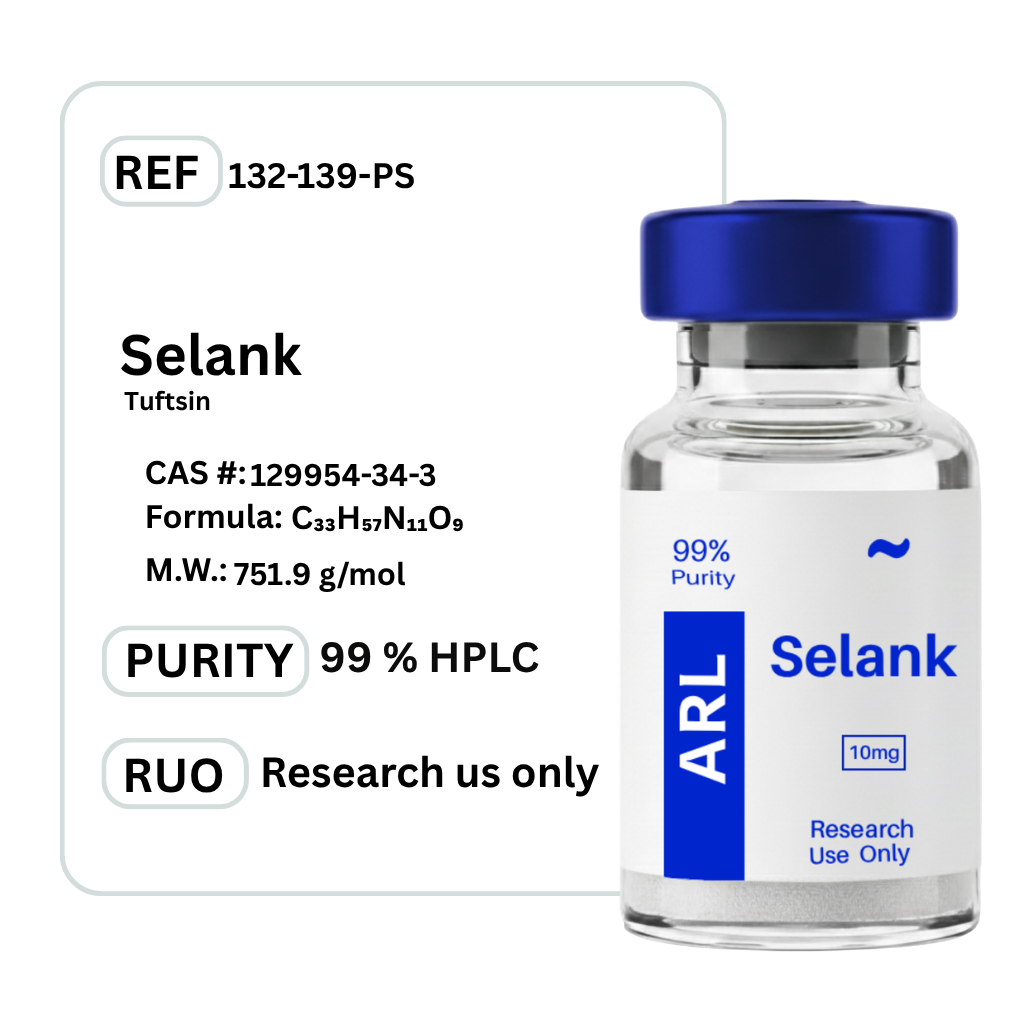
This batch of Selank Nootropic Peptide has been third party lab tested and verified for quality.
Contents: Selank
Form: Powder
Purity: 99.0%
Couldn't load pickup availability
Free Reconstitution Solution automatically added to your cart with each order.
This product is Made, Tested & Shipped From Canada.
Ships Today
Order by 1:00 PM EST
Free Shipping
For 2 or more vials
Verified+

The Ashmarin and Russian Research Legacy: Ashmarin Protocol Tuftsin Analogue
1. Introduction: Bridging Immunology and Neurobiology
The development of biologically active peptides has long been a cornerstone of Russian molecular genetics research, rooted deeply in the foundational work of scientists like Dr. Ivan P. Ashmarin. This document explores the legacy of this research, specifically focusing on the development and characteristics of the Ashmarin Protocol Tuftsin Analogue. This product, stemming from a rich tradition of discovery at institutions such as the Institute of Molecular Genetics, represents a significant advancement in the field of immunoneuromodulation.
The core motivation behind this research was to create compounds with dual-action capabilities—specifically, peptides that could simultaneously modulate the immune system and exert targeted effects within the central nervous system (CNS). The Ashmarin Protocol Tuftsin Analogue is a direct realization of this goal, offering a unique molecular structure designed for superior stability and bioavailability compared to its natural predecessor, Tuftsin.
Disclaimer: This product is for research use only. It is not for clinical administration to humans or animals.
2. Foundational Research of Dr. Ivan P. Ashmarin
Dr. Ivan P. Ashmarin's contributions at the Institute of Molecular Genetics in Russia laid the necessary groundwork for the creation of novel neuroactive peptides. His laboratory was instrumental in recognizing the therapeutic potential of small, naturally occurring peptides and developing strategies to enhance their pharmacological profiles.
The focus of Ashmarin's legacy can be summarized by three key areas of innovation:
- Peptide Stability: Addressing the inherent challenge of rapid enzymatic degradation faced by most peptides in biological systems.
- Blood-Brain Barrier (BBB) Penetration: Designing molecules capable of crossing the BBB to act directly on CNS targets.
- Structure-Activity Relationship (SAR): Systematically modifying natural structures to create analogues with improved efficacy and reduced off-target effects.
Research Focus Area
Desired Outcome
Implementation Strategy
Metabolic Stability
Prolonged half-life in circulation
Incorporation of non-natural amino acids
CNS Activity
Direct action on neural pathways
Molecular modifications enhancing lipophilicity
Immunomodulation
Targeted enhancement of immune response
Optimization of the core Tuftsin structure
3. The Natural Precursor: Tuftsin
The Ashmarin Protocol Tuftsin Analogue is an improved version of the tetrapeptide Tuftsin (Thr-Lys-Pro-Arg). Tuftsin is a naturally occurring immunomodulatory peptide found primarily in the IgG heavy chain, where it is cleaved and released into the bloodstream by the enzyme Splenin.
3.1. Biological Role of Tuftsin
Tuftsin's primary biological role is to activate phagocytic cells, particularly macrophages and neutrophils. Its effects include:
- Enhancing phagocytosis
- Increasing motility
- Stimulating superoxide production
- Promoting antigen presentation
Despite its potent immunomodulatory properties, Tuftsin exhibits significant limitations as a therapeutic agent due to its short half-life and poor stability in vivo.
3.2. Limitations of Native Tuftsin
The short biological half-life of Tuftsin is primarily due to rapid breakdown by peptidases. Furthermore, its physiochemical properties do not favor efficient penetration across the Blood-Brain Barrier (BBB), thus limiting its utility in applications requiring significant CNS activity. The Russian research legacy, under the Ashmarin Protocol, sought to overcome these exact limitations.
4. Ashmarin Protocol Tuftsin Analogue: Molecular Design
The Ashmarin Protocol Tuftsin Analogue was developed specifically to address the instability and CNS-activity limitations of native Tuftsin. This compound falls into a unique class of peptides known as "glyprolines," which is characterized by the incorporation of modified proline-like structures or other non-standard amino acid arrangements.
4.1. The "Glyproline" Concept
The term "glyproline" often refers to peptides incorporating structural motifs that enhance metabolic stability, frequently involving Proline or Glycine derivatives. The rationale for this design is two-fold:
- Enzymatic Resistance: Proline and its analogues often confer resistance to aminopeptidases and endopeptidases by introducing structural rigidity and steric hindrance around the cleavage site.
- Enhanced CNS Activity: The modifications introduced in the Ashmarin Analogue enhance its lipophilicity relative to Tuftsin, a property critical for passive diffusion across the BBB.
4.2. Comparative Analysis of Tuftsin and Analogue
The modifications in the Analogue are critical for conferring the desired pharmacological properties: enhanced immunomodulation combined with CNS activity.
Feature
Native Tuftsin
Ashmarin Analogue
Structure
Thr-Lys-Pro-Arg
Glyproline Derivative
Target Function
Immunomodulation
Immunomodulation + CNS Activity
Metabolic Stability
Low (Rapidly Cleaved)
High (Enzyme Resistant)
BBB Permeability
Poor
Enhanced
Classification
Naturally Occurring Tetrapeptide
Synthetic Glyproline Peptide
5. Mechanism of Action and Dual-Functionality
The Ashmarin Protocol Tuftsin Analogue is unique because it provides a functional model for bridging the gap between the immune system and the central nervous system—a critical concept in psychoneuroimmunology.
5.1. Immunomodulatory Mechanism
Like Tuftsin, the Analogue primarily acts through receptors on phagocytic cells. The enhanced metabolic stability means that a consistent, therapeutic concentration can be maintained for a longer duration, leading to sustained immune cell activation.
Key immunomodulatory effects observed in research include:
- Sustained stimulation of macrophage activity.
- Modulation of cytokine profiles (e.g., increased IL-1, TNF-alpha under certain conditions).
- Potential enhancement of antibody-dependent cellular cytotoxicity.
5.2. Enhanced CNS Activity
The structural modifications leading to enhanced BBB penetration allow the Analogue to directly interact with components of the CNS. This ability is what defines its unique class and differentiates it from the native Tuftsin.
Proposed CNS-related mechanisms of action:
- Glial Cell Modulation: Interaction with microglia, the CNS's resident immune cells, potentially suppressing excessive neuroinflammation.
- Neurotransmitter Modulation: Research suggests potential influence on the release or reuptake of key neurotransmitters, though the precise mechanism remains an area for continued study.
- Neuroprotective Effects: The combination of anti-inflammatory action and direct neural interaction suggests a potential role in protecting neurons under stress.
6. Applications in Research
The Ashmarin Protocol Tuftsin Analogue is a powerful tool for researchers studying the complex interplay between the immune system and the brain. Its dual functionality makes it relevant to several disparate, yet fundamentally linked, fields of research.
6.1. Psychoneuroimmunology (PNI)
The peptide serves as an ideal probe for PNI studies, allowing researchers to investigate how immune system modulation can directly influence behavior, mood, and cognitive function.
- Model Systems: Use in animal models of chronic stress, where both immune dysregulation and CNS changes are prominent.
- Targeting Neuroinflammation: Investigation of the Analogue's effect on inflammatory processes within the brain that contribute to neurodegenerative conditions.
6.2. Metabolic Stability and Drug Delivery
The molecular design of the Analogue—its enhanced stability and BBB permeability—provides a template for future drug design. Researchers can study its absorption, distribution, metabolism, and excretion (ADME) properties to inform the development of other CNS-targeting peptide therapeutics.
Research Focus
Analogue's Contribution
Measurement Endpoints
Immunomodulation
Sustained innate immune activation
Phagocytic index, cytokine assays
CNS Penetration
Model for BBB-crossing peptides
Concentration in cerebrospinal fluid (CSF)
Neuroprotection
Mitigation of neuronal damage
Neuronal viability assays, apoptosis markers
7. The Legacy of Russian Peptide Research
The work on the Ashmarin Protocol Tuftsin Analogue is not an isolated discovery but a reflection of a sustained, decades-long commitment to peptide research within Russia. Institutions like the Institute of Molecular Genetics have historically emphasized the development of synthetic, biologically active peptides (SABPs) with superior pharmacokinetic properties.
7.1. Focus on Endogenous Peptides
A key characteristic of this research tradition is the focus on modifying and optimizing peptides that are naturally occurring within the human body (endogenous peptides). This approach offers a higher probability of biological compatibility and reduced toxicity compared to entirely novel synthetic compounds.
7.2. Standardization and Protocol Development
The "Ashmarin Protocol" implies a rigorous, systematic approach to peptide analogue development. This typically involves:
- Initial synthesis and purification.
- In vitro stability assays (plasma and tissue homogenates).
- Assessment of immunomodulatory activity.
- In vivo testing for CNS penetration and behavioral effects.
The legacy ensures that any product bearing this name adheres to strict research standards, promising a high degree of purity and reliable biological activity for research purposes.
8. Handling and Storage Protocol
To maintain the high integrity and activity of the Ashmarin Protocol Tuftsin Analogue, strict handling and storage procedures must be followed.
8.1. Product Specifications
- Purity: Typically >98% by HPLC.
- Formulation: Lyophilized powder.
- CAS Number: [To be added once determined for the specific analogue]
8.2. Storage Guidelines
The lyophilized peptide must be stored under conditions that prevent degradation from moisture, light, and temperature fluctuations.
Condition
Lyophilized Powder
Reconstituted Solution
Temperature
-20°C (Long-Term Storage)
4°C (Short-Term Storage)
Protection
Desiccated, shielded from light
Avoid repeated freeze-thaw cycles
Stability
Stable for up to Date
Use within 7 days
8.3. Reconstitution
Reconstitution should be performed using an appropriate solvent, typically sterile water or a physiologically relevant buffer (e.g., PBS).
- Allow the vial to reach ambient temperature prior to opening.
- Slowly add the desired solvent volume to achieve the required stock concentration (e.g., 1 mg/mL).
- Gently swirl the vial (do not shake vigorously) until the peptide is fully dissolved.
- The date of reconstitution should be logged by the research technician, Person.
9. Research Safety and Compliance
The use of the Ashmarin Protocol Tuftsin Analogue requires strict adherence to institutional safety guidelines and ethical research practices. This material is a high-purity research chemical and must be handled with appropriate caution.
9.1. Hazard and Handling
- General Precautions: Wear standard personal protective equipment (PPE), including lab coat, safety glasses, and chemical-resistant gloves.
- Exposure: Avoid ingestion, inhalation, and direct skin or eye contact. In case of exposure, consult the relevant Safety Data Sheet (SDS) and contact the emergency response team at Person.
- Waste Disposal: Dispose of all unused material and contaminated equipment in accordance with local and institutional biological/chemical waste protocols.
9.2. Regulatory Note
As a compound designated for research use only, this product has not been evaluated by regulatory bodies such as the FDA, EMA, or equivalent agencies for safety or efficacy in clinical populations. All research must be conducted under the supervision of a qualified investigator within an approved institutional setting. Research ethics approval is required for any study involving in vivo administration.
10. Future Directions and Collaborative Research
The Ashmarin Protocol Tuftsin Analogue serves not only as a product but as a model for future research in targeted peptide delivery. The insights gained from studying its unique metabolic stability and CNS penetration are invaluable.
Future research directions using this Analogue are encouraged, especially in areas focused on systemic diseases with a neuroinflammatory component. Potential studies could focus on dose-response characteristics and long-term effects on the interaction between the immune system and the HPA (Hypothalamic-Pituitary-Adrenal) axis.
We encourage researchers to submit their findings to the centralized database linked below, contributing to the growing knowledge of glyproline peptides.
Resources
Links
Safety Data Sheet (SDS)
File
Purity Analysis Certificate
File
Protocol for In Vivo Administration
File
PNI Research Workshop
Calendar event
Institute of Molecular Genetics (Russia) Contact
Place
-
check_circle
HIGHEST QUALITY PEPTIDES
Our products are scientifically formulated and manufactured in cGMP-compliant facilities.
-
encrypted
FAST DELIVERY
Enjoy fast and reliable 3–5 day shipping.
-
check_circle
Dedicated Customer Service
Our customer service team is highly knowledgeable in peptide research and its applications. We’re available 24/7 to assist you.
Verified reviews
Tested. Verified. Trusted.
We take a laboratory-first approach to quality. Each batch is made under controlled conditions and verified by an independent lab (HPLC/MS). We only ship batches that test ≥99% purity, and we provide a full COA, including identity, methods, and chromatograms, for your review.
You may also like
-
SAVE 24%Thymosin Alpha-1
Regular price From $79.00Regular price From $79.00 Sale priceUnit price / per$104.0024% -
SAVE 23%Tesamorelin
Regular price From $80.00Regular price From $80.00 Sale priceUnit price / per$105.0023% -
SAVE 26%Sterile Water
Regular price From $14.00Regular price From $14.00 Sale priceUnit price / per$19.0026% -
SAVE 23%SLU-PP-332
Regular price $125.00Regular price $125.00 Sale priceUnit price / per$164.0023% -
SAVE 23%Sermorelin
Regular price From $70.00Regular price From $70.00 Sale priceUnit price / per$92.0023% -
SAVE 23%Retatrutide Triple Agonist
Regular price From $90.00Regular price From $90.00 Sale priceUnit price / per$118.0023% -
SAVE 26%Oxytocin Acetate
Regular price $42.00Regular price $42.00 Sale priceUnit price / per$57.0026% -
SAVE 25%Melanotan II (MT2)
Regular price $50.00Regular price $50.00 Sale priceUnit price / per$67.0025% -
SAVE 24%Lipo-C with B Vitamins
Regular price $85.00Regular price $85.00 Sale priceUnit price / per$112.0024% -
SAVE 23%Lemon Bottle
Regular price $80.00Regular price $80.00 Sale priceUnit price / per$105.0023% -
SAVE 23%L-Carnitine
Regular price $97.00Regular price $97.00 Sale priceUnit price / per$127.0023% -
SAVE 24%KPV Tripeptide
Regular price From $56.00Regular price From $56.00 Sale priceUnit price / per$74.0024% -
KLOW Blend - GHK-CU + TB-500 + BPC-157 + KPV 10mg
Regular price $200.00Regular price $200.00 Sale priceUnit price / per$261.0023% -
SAVE 23%Kisspeptin-10
Regular price From $65.00Regular price From $65.00 Sale priceUnit price / per$85.0023% -
SAVE 23%Ipamorelin
Regular price From $32.00Regular price From $32.00 Sale priceUnit price / per$42.0023% -
SAVE 24%IGF-1 LR3 (Long R3)
Regular price From $40.00Regular price From $40.00 Sale priceUnit price / per$53.0024% -
SAVE 24%Hyaluronic
Regular price $28.00Regular price $28.00 Sale priceUnit price / per$37.0024% -
SAVE 23%HGH Fragment 176-191
Regular price $97.00Regular price $97.00 Sale priceUnit price / per$127.0023% -
SAVE 23%HGH 191AA (Somatropin)
Regular price From $55.00Regular price From $55.00 Sale priceUnit price / per$72.0023% -
SAVE 25%Gonadorelin
Regular price $50.00Regular price $50.00 Sale priceUnit price / per$67.0025% -
SAVE 23%Glutathione
Regular price $83.00Regular price $83.00 Sale priceUnit price / per$109.0023% -
SAVE 23%Glow BPC-157 + GHK-CU + TB-500
Regular price $139.00Regular price $139.00 Sale priceUnit price / per$181.0023% -
SAVE 25%Epitalon (Epithalon)
Regular price From $50.00Regular price From $50.00 Sale priceUnit price / per$67.0025% -
SAVE 24%Dermorphin
Regular price $56.00Regular price $56.00 Sale priceUnit price / per$74.0024% -
SAVE 23%CJC-1295 with DAC
Regular price $139.00Regular price $139.00 Sale priceUnit price / per$182.0023%
Every vial we sell comes from a lab that follows current Good Manufacturing Practices (cGMP). That means each step of production is documented and controlled. Before a batch is released, it’s tested by independent third-party labs for purity, identity, and sterility. Certificates of analysis are available so you can see the exact test results.
Yes. The labs we work with use ISO-certified clean rooms where air quality, equipment, and handling procedures are tightly regulated. Staff are trained to pharmaceutical-grade standards. This ensures the peptides are produced in an environment that minimizes contamination risks.
Peptides in lyophilized (freeze-dried) form are stable at room temperature for transport. Once you receive them, refrigeration is recommended to maintain long-term integrity. We package every order securely to prevent damage and ship promptly, so your vials arrive in optimal condition.
We operate under strict in-house protocols that follow current Good Manufacturing Practices (cGMP). That means our team oversees the entire process from sourcing raw amino acids to the final lyophilized vial. Nothing is outsourced or repackaged. This gives us full control over purity, consistency, and sterility, and it’s why we can stand behind every single vial we ship.
Store them in the refrigerator, away from direct light and heat. If you need to keep them longer, some peptides can be stored frozen. Each vial comes with clear handling instructions so you know the proper conditions for stability.
The strongest proof is transparency. For every peptide, we can provide certificates of analysis, manufacturing documentation, and references to the published scientific research behind it. If you ever have questions, we’ll show you the data rather than ask you to take our word for it.
The difference is transparency. Most sites give you a product name and a price. We provide full batch testing, lab documentation, and direct access to certificates of analysis so you don’t have to guess what you’re getting. When you order from us, you know exactly what’s in the vial, where it was made, and how it was verified.