NAD+
NAD+
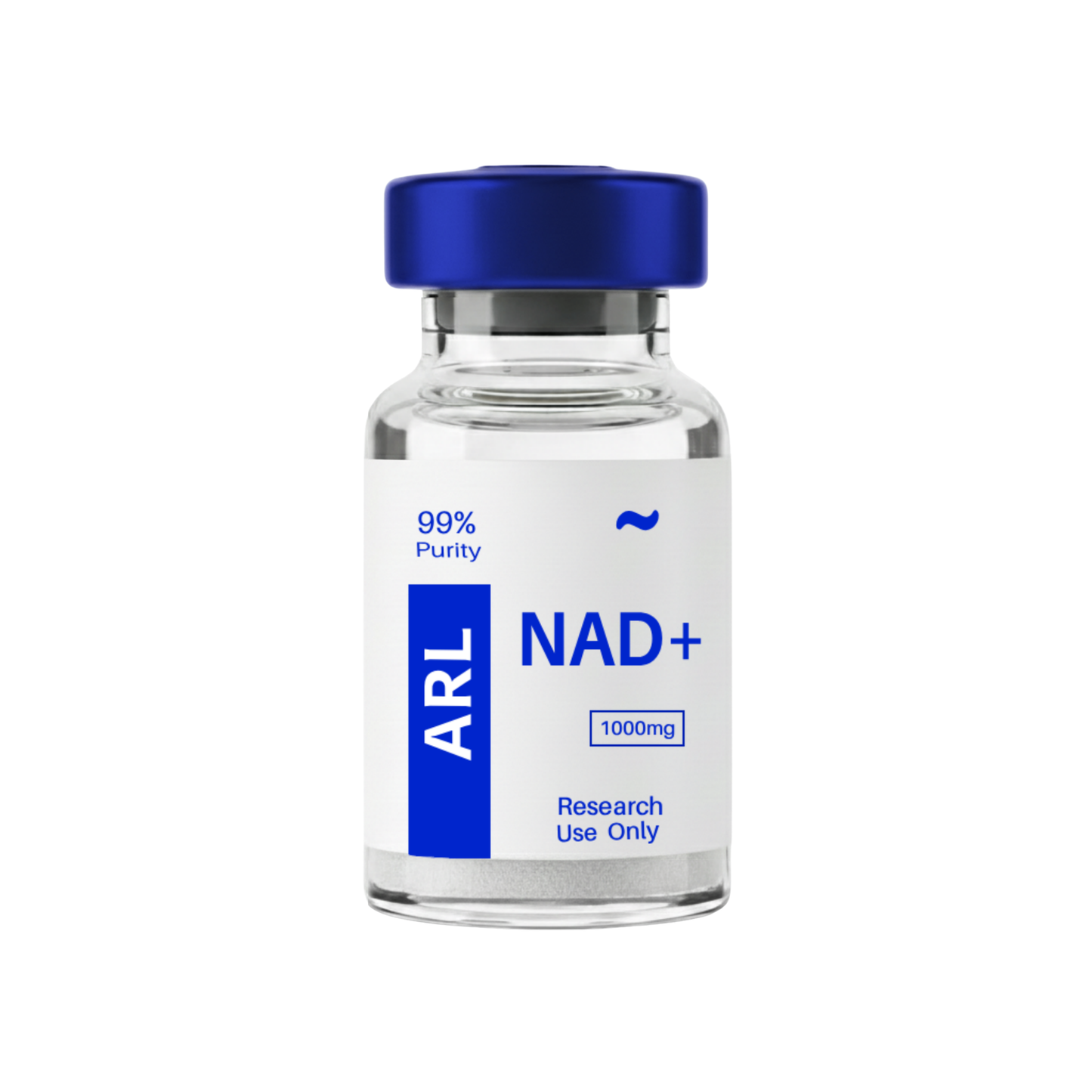
This batch of NAD+ (Nicotinamide Adenine Dinucleotide) Peptide has been third party lab tested and verified for quality.
Contents: NAD+
Form: Powder
Purity: 99.6%
Couldn't load pickup availability
Free Reconstitution Solution automatically added to your cart with each order.
This product is Made, Tested & Shipped From Canada.
Ships Today
Order by 1:00 PM EST
Free Shipping
For 2 or more vials
Verified+

Muscle Bioenergetics Research Probe
Focus: ATP Production and Muscle Endurance
This document serves as the comprehensive research dossier for the Muscle Bioenergetics Research Probe, an investigative tool designed to study the complex interplay between cellular energy metabolism, the NAD+/NADH redox couple, and skeletal muscle performance.
I. Product Overview
The Muscle Bioenergetics Research Probe is a finely-tuned biochemical agent intended solely for use in controlled research environments focusing on exercise physiology and age-related muscle decline (sarcopenia). Its application is strictly limited to in vitro and in vivo animal models.
Component
Target System
Primary Function
Research Application
Muscle Bioenergetics Probe
NAD+/NADH Homeostasis
Modulating cellular redox state
Studying mitochondrial respiratory chain efficiency
Vehicle Solution
Muscle Tissue
Optimized delivery to skeletal muscle
Assessing muscle endurance and fatigue profiles
Restriction: This product is Not for human therapeutic use.
II. Research Context: The Centrality of the NAD+/NADH Ratio (Page 2 of 10)
Skeletal muscle function is intrinsically linked to the delicate balance between the oxidized (NAD+) and reduced (NADH) forms of nicotinamide adenine dinucleotide. This ratio is a primary sensor and regulator of the cell's metabolic state, particularly during periods of high energy demand, such as exercise.
A. ATP Generation and the Mitochondrial Respiratory Chain
The core mechanism of continuous ATP production in muscle relies on oxidative phosphorylation (OXPHOS), which occurs within the mitochondria.
- Electron Transfer: NADH acts as a crucial electron carrier, donating electrons to Complex I of the mitochondrial respiratory chain. This electron transfer generates the proton gradient necessary to power ATP synthase. Maintaining a high NAD+/NADH ratio is critical for ensuring a continuous supply of NAD+ to accept electrons during the Citric Acid Cycle (TCA cycle), thereby facilitating the flow of electrons for ATP production.
- Probe Function in Research: The Muscle Bioenergetics Research Probe is designed to interact with pathways that govern the production or consumption of NAD+ and NADH, allowing researchers to precisely measure the resulting changes in the efficiency of the mitochondrial respiratory chain.
A key experiment using this probe will involve measuring oxygen consumption rates (OCR) in isolated muscle mitochondria, providing data on the coupling efficiency of OXPHOS.
Condition
Expected NAD+/NADH Ratio
Expected ATP Flux
Basal State
High
Moderate
Probe Treatment (High Efficacy)
Enhanced High
High
Exhaustive Exercise Model
Low
Rapid Decline
Probe Treatment Post-Exercise
Recovery Acceleration
Accelerated Recovery
III. Impact on Muscle Endurance and Aging (Page 3 of 10)
Muscle endurance—the ability of muscle to sustain force or continue performing work over time—is fundamentally limited by the rate of ATP regeneration and the accumulation of metabolic byproducts.
A. Preclinical Evidence in Aged Models
Research using precursors to NAD+ in animal models, particularly aged mice, has yielded significant findings relevant to muscle function and endurance:
- Mitochondrial Efficiency: Supplementation has been shown to improve the functional capacity of aged muscle mitochondria. This includes enhanced electron transport efficiency and increased biogenesis of new, healthy mitochondria.
- Reduction of Inflammation: Systemic and local muscle inflammation, a hallmark of aging and sarcopenia, is often attenuated following interventions that favorably shift the NAD+/NADH balance. Reduced inflammation may delay fatigue onset.
B. Sarcopenia Research
Sarcopenia is characterized by progressive loss of skeletal muscle mass and strength. The decline is heavily implicated with mitochondrial dysfunction. The Muscle Bioenergetics Research Probe is Ideal For investigating these mechanisms:
- Measuring changes in muscle fiber cross-sectional area following chronic probe administration in aged rodent models.
- Assessing functional outcomes, such as grip strength and treadmill running time to exhaustion, which are direct measures of muscle endurance.
The use of the probe allows for the isolation and study of the NAD+/NADH pathway's contribution, separating it from other confounding variables in the aging process.
IV. Maintaining Cellular Redox Balance (Page 4 of 10)
Redox balance is crucial for a vast array of cellular processes, extending beyond the mitochondria into the cytoplasm.
A. Glycolysis and the Citric Acid Cycle
The NAD+/NADH ratio acts as a linchpin connecting glycolysis (cytosolic ATP production) and the TCA cycle (precursor to OXPHOS):
- Glycolysis: NAD+ is required for the oxidation of glyceraldehyde-3-phosphate. Without sufficient NAD+, this pathway slows dramatically.
- Citric Acid Cycle: NADH is generated at several points within the TCA cycle. The rate of the cycle is therefore sensitive to the availability of NAD+ to accept hydrogens.
The Muscle Bioenergetics Research Probe can be used to perturb the redox state and observe the acute impact on glycolytic flux using stable isotope tracing techniques.
B. Redox-Sensitive Signaling Pathways
Many critical signaling molecules and enzymes in muscle, such as sirtuins (NAD+-dependent deacetylases), are directly regulated by the availability of NAD+.
Pathway
Redox Dependence
Impact on Muscle
Sirtuin Activity
Directly dependent on NAD+ availability
Regulates gene expression, mitochondrial biogenesis, and stress resistance
Poly-ADP-ribose polymerases (PARPs)
NAD+ consumer
DNA repair and regulation of cell death
Lactate Dehydrogenase (LDH)
Uses NADH to produce NAD+
Converts pyruvate to lactate, regenerating NAD+ for glycolysis
Understanding how the probe modulates these pathways is essential for fully characterizing its effects on muscle endurance.
V. Experimental Protocols: In Vitro Analysis (Page 5 of 10)
This section details standard operating procedures for utilizing the Muscle Bioenergetics Research Probe in cell culture models, ensuring reproducibility and comparability across research groups.
A. Muscle Cell Line Culture and Treatment
- Cell Selection: Utilize C2C12 mouse myoblasts (differentiated into myotubes) or primary human skeletal muscle cells (HSMCs) for optimal relevance to in vivo muscle.
- Probe Concentration: Establish a dose-response curve ranging from Date to Date. Initial titration should span two logs of magnitude.
- Experimental Duration: Typical acute experiments range from 30 minutes to 6 hours. Chronic exposure studies typically run for Date.
B. Sevehorse Measurement using the File Analyzer
The following table outlines the parameters for analyzing mitochondrial function in cultured myotubes.
Measurement
Reagent Used
Purpose
Basal Respiration
None
Baseline mitochondrial function
ATP Production Rate
Oligomycin (Inhibitor of ATP Synthase)
Rate of oxygen consumption linked to ATP synthesis
Maximal Respiration
FCCP (Uncoupler)
Maximum capacity of the electron transport system
Spare Respiratory Capacity
Calculation (Maximal minus Basal)
Measure of the cell's ability to respond to increased energy demand
The data from these experiments will quantify the probe's direct effect on mitochondrial bioenergetics.
VI. Experimental Protocols: In Vivo Analysis (Page 6 of 10)
Application of the probe in live animal models provides the most accurate assessment of its impact on muscle endurance.
A. Animal Models and Administration Route
- Model: Aged C57BL/6 mice (18-24 months) are recommended for sarcopenia studies. Young adult mice (3-6 months) are suitable for exercise physiology models.
- Route of Administration: The probe may be administered via oral gavage, intraperitoneal (IP) injection, or subcutaneous injection, depending on the research objectives and the vehicle solution characteristics detailed in the File safety data sheet.
- Dosing Schedule: Chronic studies typically involve daily administration for 4-8 weeks.
B. Functional Muscle Endurance Testing
Researchers must implement standardized protocols for measuring muscle endurance and strength.
- Treadmill Exhaustion Test: Mice are run on an incline treadmill with increasing speed increments until the point of exhaustion (defined as time spent on the shock grid for Date consecutive seconds). This measures whole-body endurance.
- Grip Strength Test: A force transducer measures the peak force exerted by the forelimbs. This provides a direct measure of maximal muscle strength.
- Wire Hanging Test: Measures the time an animal can hang from a wire, a proxy for sustained muscle grip and endurance.
Test
Endpoint
Relevance to Endurance
Treadmill Exhaustion
Time to exhaustion (minutes)
Integration of metabolic, cardiovascular, and muscle function
Grip Strength
Peak Force (Newtons)
Correlates with muscle mass and general strength
Wire Hanging
Latency to fall (seconds)
Sustained isometric contraction capability
VII. Advanced Research Techniques (Page 7 of 10)
For deeper mechanistic insight, the following advanced techniques are recommended for studies utilizing the Muscle Bioenergetics Research Probe.
A. Mass Spectrometry for Metabolomics
To precisely track the NAD+/NADH ratio and downstream metabolic flux:
- Sample Preparation: Flash-freeze muscle tissue immediately upon harvest to preserve labile metabolites.
- Analysis: Liquid Chromatography-Mass Spectrometry (LC-MS) can quantify total NAD+ and NADH, as well as critical intermediates in glycolysis and the TCA cycle (e.g., pyruvate, lactate, citrate, alpha-ketoglutarate). This provides a metabolic fingerprint of the probe's activity.
B. Proteomics and Signaling Analysis
Muscle tissue samples can be analyzed using Western blotting or mass spectrometry-based proteomics to assess the activation of key endurance-related pathways.
- Target Proteins: AMPK, PGC-1α, Sirtuin 1 (SIRT1), and NF-κB (related to inflammation).
- Focus: Quantifying the phosphorylation state (activation) and total protein levels of these critical enzymes following probe exposure.
These analyses will confirm the link between the probe's effect on NAD+/NADH and the resultant improvements in mitochondrial biogenesis and inflammatory status.
VIII. Data Interpretation and Reporting (Page 8 of 10)
Consistent interpretation and transparent reporting of results are paramount for advancing the field of muscle bioenergetics.
A. Quantification of Mitochondrial Efficiency
- P/O Ratio: The Phosphate/Oxygen ratio (the number of ATP molecules produced per oxygen atom consumed) is a direct metric of mitochondrial coupling efficiency. Researchers should calculate this ratio under probe-treated conditions.
- ROS Production: Reactive Oxygen Species (ROS) generation is a byproduct of inefficient electron transfer. Data must include measurements of ROS in both probe-treated and control groups, often utilizing fluorescent probes like MitoSOX.
The following table provides a template for reporting OCR data:
Experimental Group
Basal OCR (pmol/min/mg)
Max OCR (pmol/min/mg)
Spare Capacity (%)
Vehicle Control
Probe Concentration 1
Probe Concentration 2
Positive Control (Person)
B. Statistical Considerations
All in vivo functional tests require robust statistical power. Researchers should use at least Date animals per group and report results as Mean ± Standard Error of the Mean (SEM) or Standard Deviation (SD). Appropriate statistical tests (e.g., ANOVA, t-tests) must be used based on experimental design.
IX. Safety and Handling Instructions (Page 9 of 10)
The Muscle Bioenergetics Research Probe is a research chemical and must be handled with appropriate caution and in accordance with institutional biosafety guidelines.
A. Required Personal Protective Equipment (PPE)
- Safety Goggles or Face Shield
- Nitrile Gloves (checked regularly for integrity)
- Laboratory Coat
B. Storage and Disposal
- Storage: Store the probe at -20°C in a dark, dry environment. Avoid repeated freeze-thaw cycles. Reference the File for long-term stability data.
- Disposal: Dispose of the material and all contaminated waste (e.g., pipette tips, cell culture media) according to local regulations for chemical waste. Do NOT dispose of the material down the sink or in general waste.
X. Collaborative Research Opportunities and Future Directions (Page 10 of 10)
The Muscle Bioenergetics Research Probe is intended to serve as a platform for collaboration across disciplines focused on muscle health and disease.
A. Suggested Future Research Avenues
- Disease Models: Investigate the probe's efficacy in genetic models of muscular dystrophy or muscle wasting induced by chemotherapy.
- Tissue Specificity: Study the probe's distribution and activity in other high-energy demand organs, such as the heart and brain, to understand potential off-target effects.
- Molecular Dynamics: Use advanced modeling to predict binding sites and mechanism of action at the molecular level.
B. Research Support
For technical assistance regarding experimental design or data analysis, please contact the product's lead scientist, Person, at the research support center located in Place. Researchers planning collaborative projects should schedule an initial consultation call via this calendar link: Calendar event.
-
check_circle
HIGHEST QUALITY PEPTIDES
Our products are scientifically formulated and manufactured in cGMP-compliant facilities.
-
encrypted
FAST DELIVERY
Enjoy fast and reliable 3–5 day shipping.
-
check_circle
Dedicated Customer Service
Our customer service team is highly knowledgeable in peptide research and its applications. We’re available 24/7 to assist you.
Verified reviews
Tested. Verified. Trusted.
We take a laboratory-first approach to quality. Each batch is made under controlled conditions and verified by an independent lab (HPLC/MS). We only ship batches that test ≥99% purity, and we provide a full COA, including identity, methods, and chromatograms, for your review.
You may also like
-
SAVE 24%Thymosin Alpha-1
Regular price From $79.00Regular price From $79.00 Sale priceUnit price / per$104.0024% -
SAVE 23%Tesamorelin
Regular price From $80.00Regular price From $80.00 Sale priceUnit price / per$105.0023% -
SAVE 26%Sterile Water
Regular price From $14.00Regular price From $14.00 Sale priceUnit price / per$19.0026% -
SAVE 23%SLU-PP-332
Regular price $125.00Regular price $125.00 Sale priceUnit price / per$164.0023% -
SAVE 23%Sermorelin
Regular price From $70.00Regular price From $70.00 Sale priceUnit price / per$92.0023% -
SAVE 23%Retatrutide Triple Agonist
Regular price From $90.00Regular price From $90.00 Sale priceUnit price / per$118.0023% -
SAVE 26%Oxytocin Acetate
Regular price $42.00Regular price $42.00 Sale priceUnit price / per$57.0026% -
SAVE 25%Melanotan II (MT2)
Regular price $50.00Regular price $50.00 Sale priceUnit price / per$67.0025% -
SAVE 24%Lipo-C with B Vitamins
Regular price $85.00Regular price $85.00 Sale priceUnit price / per$112.0024% -
SAVE 23%Lemon Bottle
Regular price $80.00Regular price $80.00 Sale priceUnit price / per$105.0023% -
SAVE 23%L-Carnitine
Regular price $97.00Regular price $97.00 Sale priceUnit price / per$127.0023% -
SAVE 24%KPV Tripeptide
Regular price From $56.00Regular price From $56.00 Sale priceUnit price / per$74.0024% -
KLOW Blend - GHK-CU + TB-500 + BPC-157 + KPV 10mg
Regular price $200.00Regular price $200.00 Sale priceUnit price / per$261.0023% -
SAVE 23%Kisspeptin-10
Regular price From $65.00Regular price From $65.00 Sale priceUnit price / per$85.0023% -
SAVE 23%Ipamorelin
Regular price From $32.00Regular price From $32.00 Sale priceUnit price / per$42.0023% -
SAVE 24%IGF-1 LR3 (Long R3)
Regular price From $40.00Regular price From $40.00 Sale priceUnit price / per$53.0024% -
SAVE 24%Hyaluronic
Regular price $28.00Regular price $28.00 Sale priceUnit price / per$37.0024% -
SAVE 23%HGH Fragment 176-191
Regular price $97.00Regular price $97.00 Sale priceUnit price / per$127.0023% -
SAVE 23%HGH 191AA (Somatropin)
Regular price From $55.00Regular price From $55.00 Sale priceUnit price / per$72.0023% -
SAVE 25%Gonadorelin
Regular price $50.00Regular price $50.00 Sale priceUnit price / per$67.0025% -
SAVE 23%Glutathione
Regular price $83.00Regular price $83.00 Sale priceUnit price / per$109.0023% -
SAVE 23%Glow BPC-157 + GHK-CU + TB-500
Regular price $139.00Regular price $139.00 Sale priceUnit price / per$181.0023% -
SAVE 25%Epitalon (Epithalon)
Regular price From $50.00Regular price From $50.00 Sale priceUnit price / per$67.0025% -
SAVE 24%Dermorphin
Regular price $56.00Regular price $56.00 Sale priceUnit price / per$74.0024% -
SAVE 23%CJC-1295 with DAC
Regular price $139.00Regular price $139.00 Sale priceUnit price / per$182.0023%
Every vial we sell comes from a lab that follows current Good Manufacturing Practices (cGMP). That means each step of production is documented and controlled. Before a batch is released, it’s tested by independent third-party labs for purity, identity, and sterility. Certificates of analysis are available so you can see the exact test results.
Yes. The labs we work with use ISO-certified clean rooms where air quality, equipment, and handling procedures are tightly regulated. Staff are trained to pharmaceutical-grade standards. This ensures the peptides are produced in an environment that minimizes contamination risks.
Peptides in lyophilized (freeze-dried) form are stable at room temperature for transport. Once you receive them, refrigeration is recommended to maintain long-term integrity. We package every order securely to prevent damage and ship promptly, so your vials arrive in optimal condition.
We operate under strict in-house protocols that follow current Good Manufacturing Practices (cGMP). That means our team oversees the entire process from sourcing raw amino acids to the final lyophilized vial. Nothing is outsourced or repackaged. This gives us full control over purity, consistency, and sterility, and it’s why we can stand behind every single vial we ship.
Store them in the refrigerator, away from direct light and heat. If you need to keep them longer, some peptides can be stored frozen. Each vial comes with clear handling instructions so you know the proper conditions for stability.
The strongest proof is transparency. For every peptide, we can provide certificates of analysis, manufacturing documentation, and references to the published scientific research behind it. If you ever have questions, we’ll show you the data rather than ask you to take our word for it.
The difference is transparency. Most sites give you a product name and a price. We provide full batch testing, lab documentation, and direct access to certificates of analysis so you don’t have to guess what you’re getting. When you order from us, you know exactly what’s in the vial, where it was made, and how it was verified.